
Adult ADHD: Understanding the Mind Beyond the Stereotypes

Adult ADHD is a neuro-developmental condition that can affect attention, organization, impulse control, emotional regulation, and motivation. It is not a sign of laziness, low intelligence, or a lack of willpower. In fact, many adults with ADHD are creative, energetic, curious, and highly capable. Their difficulties often arise not from a lack of effort, but from differences in how their brains manage attention and executive functions.
What does adult ADHD look like?
ADHD can vary from person to person. Some adults experience primarily inattentive symptoms, while others experience hyperactivity and impulsivity—or a combination of both. Common experiences may include:
Frequently losing keys, phones, or important documents
Struggling to begin or complete tasks
Procrastinating, even when a deadline is important
Forgetting appointments, bills, or commitments
Becoming easily distracted by sounds, thoughts, or notifications
Hyper-focusing on activities that feel interesting or rewarding
Feeling restless or constantly needing stimulation
Interrupting conversations or speaking before thinking
Experiencing difficulty managing time
Feeling overwhelmed by clutter, routines, or administrative tasks
One of the most confusing aspects of ADHD is that a person may be able to focus intensely on something they enjoy while finding routine tasks nearly impossible. This is not necessarily a lack of attention. It is often a difficulty regulating attention according to the situation.
The Emotional Impact of Undiagnosed ADHD
Many adults with undiagnosed ADHD spend years blaming themselves. They may be told that they are careless, disorganized, unreliable, or not living up to their potential. Over time, these messages can contribute to shame, anxiety, low self-esteem, or burnout.
Some people develop strategies that help them appear organized from the outside while feeling overwhelmed internally. Others may compensate by working excessively, relying on last-minute pressure, or avoiding tasks that feel difficult. These strategies can work temporarily, but they may become exhausting over time.
Receiving an ADHD diagnosis can be a turning point. It does not erase past difficulties, but it can provide a clearer explanation and open the door to effective support.
ADHD and Relationships
ADHD can affect relationships in subtle ways. Forgetting plans, missing details in conversations, interrupting, or struggling with household responsibilities may create tension with partners, family members, or friends.
Open communication can help. It may be useful to discuss specific challenges without assigning blame and to create practical systems together—for example, shared calendars, written reminders, regular check-ins, or clearly divided responsibilities.
Understanding ADHD also means recognizing its strengths. Many adults with ADHD bring spontaneity, humor, empathy, enthusiasm, and fresh perspectives to their relationships.
Strategies That Can Make Daily Life Easier
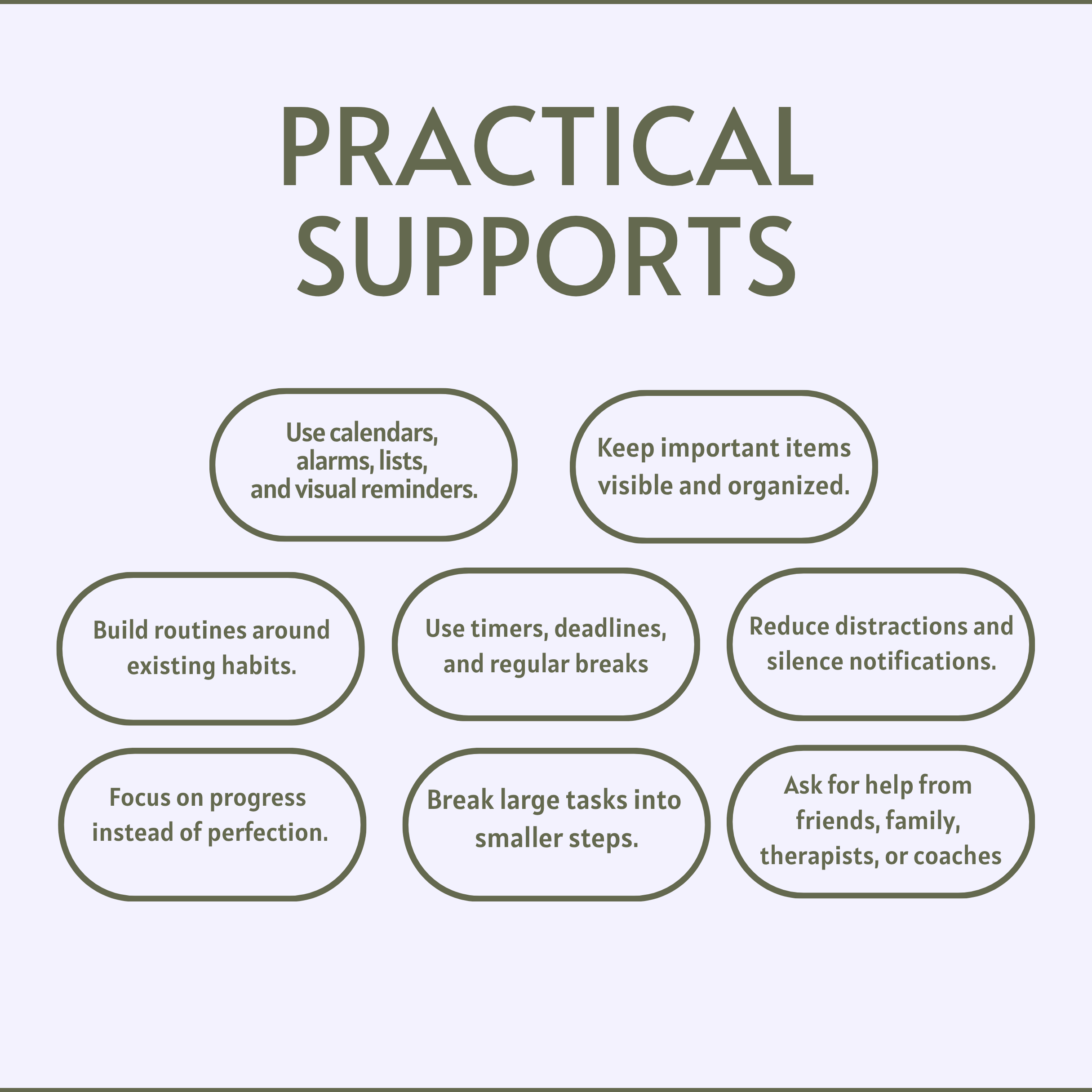
There is no single solution that works for everyone, but practical supports can make a meaningful difference. Consider trying:
Externalize reminders. Use calendars, alarms, lists, and visual notes instead of relying on memory alone.
Break tasks into small steps. “Clean the house” can become “put dishes in the dishwasher” or “clear one surface.”
Use visible organization. Items that are hidden may be forgotten, so open storage and labels can help.
Create routines around existing habits. For example, place medication beside your toothbrush if you take it in the morning.
Reduce distractions. Silence notifications, use website blockers, or work in a quieter environment.
Use timers and deadlines. Short work periods followed by breaks can make difficult tasks feel more manageable.
Ask for support. Friends, family, therapists, coaches, and workplace accommodations can all play a role.
Focus on progress rather than perfection. Sustainable systems are more useful than ideal systems that are impossible to maintain.
Seeking Professional Help
If ADHD symptoms interfere with work, relationships, finances, or daily responsibilities, consider speaking with a qualified healthcare professional. An evaluation may include questions about current symptoms, childhood experiences, medical history, and how difficulties affect different areas of life.
Other conditions, including anxiety, depression, sleep problems, stress, and certain medical issues, can cause similar symptoms. A professional assessment can help identify what is happening and determine appropriate treatment options. Treatment may include education, behavioral strategies, psychotherapy, medication, or a combination of approaches.
A Different Way To See Yourself
Adult ADHD can create real challenges, but it does not define a person’s worth or potential. With the right understanding and support, many adults learn to work with their brains rather than constantly fighting against them.
The goal is not to become a different person. It is to build an environment, routine, and support system that make it easier to use your strengths and manage the areas that are more difficult.
If you recognize yourself in this article, you are not alone—and struggling does not mean you are failing. It may simply mean that the strategies you have been using were never designed for the way your brain works.